Project · Flutter
Legease: what it solved and how

AI-driven contract analysis platform providing clause breakdowns, risk identification, and security.
The full explanation
The problem with reading contracts
Many people sign contracts without reading them because manual review is slow and costly. As an estimate, assuming services such as those with 24 to 72 hour turnaround. A business owner may face bills of $200 to $600 per lease when hiring outside services. This adds up fast for firms handling many contracts. Legease uses AI to cut lease processing cost to $0.50 to $5 per lease. It also reduces review time significantly, from hours to minutes. The tool does not replace legal advice. Instead, it highlights key terms like rent escalations, renewal options, and liability clauses so you know what to discuss with your lawyer. This makes it easier to act fast on deals without skipping due diligence. If you are comparing quotes for building a similar tool, see what a fair quote looks like.

How Legease is different from other AI tools
Legease processes lease documents by reconciling a base lease and its amendments into a single set of currently effective values. It extracts structured data, such as tenant names, dates, and financial terms, from commercial lease documents in minutes. Generic AI tools read contracts as text and give a general overview. Legease uses optical character recognition (OCR), natural language processing (NLP), and large language models (LLMs) to extract specific items like tenant names. Dates, and financial terms from lease documents in minutes. It reads rent tables, escalation clauses, and percentage rent schedules as tables to match the source format.
This makes Legease more useful for real estate teams. They need to act on lease terms. For example, if a lease has five amendments changing rent over time, Legease combines them. It shows only the current rent and next due date. Generic tools list each change separately. This forces you to do the math yourself.
Legease supports non-standard clauses by focusing on your asset class and geographic market, as this is seen as a key differentiator in such platforms. Most AI tools expect standard language. Legease learns from local patterns. It does not decide if a clause is fair. It highlights what is out of the ordinary. It suggests when to call a lawyer.
You can verify how well a tool handles your documents. Test it on a lease with amendments and a rent table. Check if it gives a single updated rent value. Check if it reads the table correctly. For help checking a vendor quote, see how to verify without being technical.
What kinds of contracts Legease handles
Legease helps you understand contracts, leases, NDAs, policies, and terms by turning legalese into plain English. It translates complex legal language into plain English so you can understand what you are agreeing to. The tool handles common sections like limitation of liability, indemnity, termination, governing law, confidentiality, warranties, and dispute resolution. It helps build a structured repository of clauses such as payment terms and indemnification. For the most accurate results, use short excerpts rather than full documents. This helps avoid errors in translation and keeps the output clear. If your document is long, break it into smaller parts before uploading.
You may want to know which features are must-have vs later features when planning your own tool must-have vs later features.
Does Legease support Indian legal terms?
No. Legease is not designed to identify or interpret Indian legal terms or state-specific clauses. It focuses on improving clarity and preserving the meaning of legal language. It does not validate jurisdiction-specific rules. You should not rely on it for contracts that require compliance with Indian state laws or bilingual term matching.
It allows users to select a jurisdiction to guide translation focus. This does not mean it supports local legal standards. For example, if you upload a rental agreement for Tamil Nadu, Legease may simplify the language. But it will not flag missing Rent Control Act clauses. It also will not verify bilingual Hindi-Tamil terms.
Other tools like Legitt AI claim to adapt to regional legal language. But there is no evidence they support Indian state-level requirements. Always cross-check your contract against local laws. For data privacy duties under India's DPDP Act, see the guide on duties under India's DPDP Act.
How Legease processes and analyses contracts
Legease uses optical character recognition (OCR) to turn scanned contracts into readable text, based on general use of OCR in AI legal document tools. Natural language processing (NLP) helps AI analyse legal documents by scanning text, as seen in contract analysis and text extraction.
The AI uses NLP, machine learning (ML), and large language models (LLMs) to detect where clauses start and end. It classifies them by type and extracts key content. For example, it can classify clauses as termination or confidentiality clauses. Then it stores that data in a structured format. Every extracted data point should link back to a specific page and clause in the source document. This lets you check the source anytime. It keeps the analysis transparent.
Risky clauses are flagged based on predefined risk parameters. The system looks for common high-risk areas like indemnity, liability, termination, renewal, notice requirements, and confidentiality terms. Each risk is rated as low, medium, or high based on how likely it is to cause financial setbacks, reputational damage, or trigger claims. This helps you decide when to hand over to a lawyer.
You can learn more about what an API is in plain words [/glossary/what-is-api/].

Security and data handling in Legease
Legitt AI uses AES-256 encryption for data at rest and in transit. It is compliant with GDPR, SOC 2, and ISO 27001 standards. These certifications suggest it meets certain standards for data protection and operational security. The Legalese Translator does not show where documents are processed and stored.
The Legalese Translator is not designed to show how long uploaded contracts are kept in the system. The Legalese Translator is not designed to show whether users can delete their contract and its analysis permanently.
Role-based access controls ensure only authorised users can view or export data. The Legalese Translator is not designed to show who, if anyone, can access user documents inside the company. Ask the provider directly about data residency and deletion rights.
Integration and workflow features
Legease connects to Google Drive, Box, and SharePoint. Integration with Dropbox is not confirmed. You can import contracts from contract repositories it integrates with, such as Google Drive and Box, and from CRM tools like Salesforce and HubSpot. The storage of past agreements and retention period are not specified in the evidence. You can compare two contracts using AI. It highlights similarities and differences in documents. This is useful when reviewing updated leases or vendor terms. E-signature workflows are not mentioned in the available evidence. If you need to sign and track approvals, check whether your platform supports electronic signature and remote notarization. For full workflow support, ensure access to all contract versions. These include drafts, signed copies and amendments. They should be stored in your document system.
You may also want real-time order tracking and secure communication in your workflow real-time order tracking and secure communication.
Cost and time savings from AI contract review
AI reduces contract review cost by 50 to 90% and review time by 85% in real-world deployments at some firms. As seen in commercial real estate lease reviews. Manual review costs $200 to $600 when outsourced, with turnaround times of 24 to 72 hours and costs varying by vendor and QA requirements. Manual abstraction at $300 per lease in staff time totals $4,500. In contrast, AI lease abstraction costs $0.50 to $5 in compute per lease. An AI platform completing the same work in 3 hours at $200 in platform cost delivers a 95% cost reduction on a per-deal basis. Time per lease drops from 2 hours to 17 minutes in real-world use. This means faster decisions and lower legal bills. For example, a property manager reviewing 50 leases a year could save over $4,000 and 125 hours. These savings apply to standard commercial leases with clear formatting. You can build the cost of your app if you are planning a similar tool.

When Legease does not work or should not be used
When Legease does not work or should not be used
Do not use an AI contract tool when the decision is important, the risk is high, or the jurisdiction matters. It should not replace a lawyer in these cases. AI can inform your choices but not replace legal judgment. For example, do not rely on it for mergers, land disputes, or criminal liability.
When the AI misses a clause, human review is needed. Leading AI lease abstraction platforms achieve 90 to 97% accuracy on standard commercial lease terms. False positives and false negatives occur. This is especially true in complex or non-standard contracts.
You can test the quality of analysis. Compare the AI output to a manual review. Check if key clauses like termination, liability, and payment terms are correctly flagged. Pairing AI with human legal verification improves results.
Remember, this guide does not cover all risks. See what the guides are not for limits.
Questions people ask
What does Legease mean for a business owner?
Legease uses AI to extract key terms from contracts in 1 to 10 minutes, at a compute cost of ₹0.50 to ₹5. Outsourced review takes 24 to 72 hours and costs ₹200 to ₹600. This can mean faster reviews and lower costs for your legal paperwork.
What do I need to decide first?
You must decide which document types and jurisdictions you need to support. The tool works best when tailored to your asset class and market. Start by listing the contracts you handle most often and where they apply.
What can go wrong?
You may face risks from overrelying on AI or mishandling sensitive data. The tool does not replace legal judgment and may not show where your data is stored. Always verify outputs and check access controls.
Is Legease safe for sensitive contracts?
It uses AES-256 encryption and meets GDPR, SOC 2, and ISO 27001 standards. But it does not confirm data residency or deletion rights. Check this for your case with a data protection officer or lawyer.
Can I use it for rental agreements in Hindi?
It may not work reliably for Hindi rental agreements. The tool is not designed to interpret Indian legal terms or state-specific clauses. Use it for clarity, not compliance, and verify with a local lawyer.
How accurate is it?
It achieves 90 to 97% accuracy on standard commercial lease terms. This means some clauses may need manual check. Always review key sections like payments and liabilities.
Does it replace a lawyer?
No, it does not replace a lawyer. It helps you understand contracts but cannot give legal advice. Use it as a first step, then consult a lawyer for high-risk or jurisdiction-specific decisions.
What if the AI makes a mistake?
Human review is necessary to catch errors in AI outputs. Accuracy depends on training data and risk scoring. Always double-check flagged clauses with a legal expert.
Can I build something like this?
As an estimate, a basic version could cost at least $2,500 per month using existing platforms. Building from scratch would take more time and hidden costs. Check what a fair quote looks like.
The thinking
One decision worth defending
- 01
Problem
Small businesses in India need to quickly spot risky clauses in contracts without spending hours or hiring expensive lawyers for every document.
- 02
Decision
Use AI to flag key clauses and risks in commercial contracts, then let a lawyer confirm findings—keeping legal judgment central.
- 03
Why it holds
AI speeds up review by 85% and cuts cost by 50 to 90%, but misses local legal terms. Human oversight ensures accuracy where it matters.
What it includes
Built
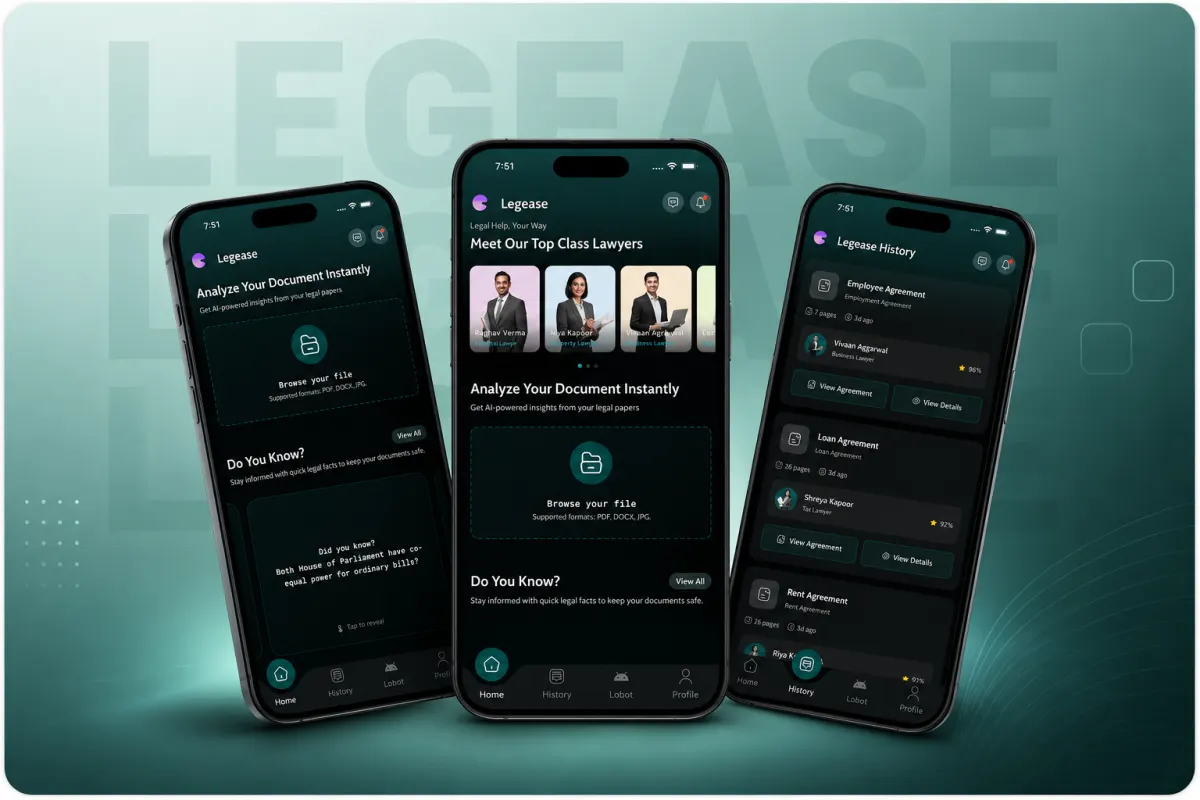
- Clause-by-clause breakdown with plain-English summaries
- Risk flags for indemnity, liability, termination and confidentiality
- Secure storage and lawyer-matched recommendations
- History of reviewed contracts and past findings
AI must show its working and link findings to source clauses. Trust comes from traceability, not automation alone.
Keep going